

Chef Hillary Sterling’s Meal Prep Formula: Two Proteins, a Week of Dinners
Plus, how she found her confidence in the kitchen again after a crushing review.

When I first started reading Hillary Sterling’s new cookbook, Ammazza!, I was struck by one line: “A scathing NewYork Times review,” writes the chef, “left me with so much self-doubt that I stopped creating new dishes for fear of judgment and failure.”
Most of us haven’t had our cooking criticized in The New York Times, but something about that moment felt familiar. Even cooking a few mediocre dinners at home can make me feel blank, the vault of dinner ideas empty.
So I knew I wanted to ask Hillary about how she found her voice in the kitchen again, and where she looks for cooking inspiration now.
Our whole conversation is on the podcast—including the Martha-Stewart-inspired routine Hillary swears by.
Hillary says that in order to dream up the kinds of dishes that appear in her book (and her restaurant), she has to really tune in to what each ingredient seems to be calling for.
Take vinaigrettes, for example. “Could our dill vinaigrette right now go on asparagus? Sure,” Hillary says, “Could that mint vinaigrette go on carrots or artichokes? Sure. But I think it’s more about really kind of channeling in with the vegetable. Each vegetable has their own flavor profiles and textures, right?”
“A lot of times,” she says, “you’ll find me in the kitchen, just eating raw vegetables, or eating smoked or cooked vegetables at all the different stages. And what that does is tell me what it needs.”
At home, though, Hillary keeps things exceedingly simple: “I do a lot of meal prep on Saturdays and Sundays leading up to Monday,” she says, “I think that makes things less overwhelming.”
Hillary cuts down her work by purchasing pre-cleaned leeks and mushrooms, and sometimes pre-breaded pork or chicken cutlets from the local butcher.
“We do a lot of roasted chicken thighs and legs and breasts,” she says. They’ll go in chicken tacos one night, and “chicken fried rice the next night, with those very handy cleaned leeks and mushrooms from Wegmans.” Sometimes she’ll warm a can of beans with garlic and serve it with another piece of chicken.
Also in the rotation: A pot of bolognese, tossed with pasta one night, and then transformed later in the week into chili by adding in a can of beans, some spices, and some Fritos or tortilla chips on top. The specifics can vary, but essentially, she’s always prepping two proteins and rotating them into simple but varied dishes throughout the week.
When all else fails, she laughs, “pasta takes 10 minutes to cook if you’re really in bad shape.” Her recipes for cacio e pepe and pasta alla gricia include a few smart moves for easier, creamier pasta; scroll down the page to find them.
⚠️ This newsletter is long and might get cut off in your email; read online here ⚠️
LAST CALL: Cookware, pantry, and cookbook giveaway!
Win a Staub Dutch oven, Italian specialties from Gustiamo, spices from Diaspora Co., preserves made with Oishii berries, mugs from East Fork…


🥇 The quickest way to enter to win a copy of Hillary Sterling’s Ammazza! is to sign up as a paid subscriber to this newsletter by end of day Sunday, May 17, 2026.
🥈 Can’t swing a subscription right now? Free subscribers can still enter to win: Just send in “what’s in my fridge right now” voice memo for us to play on The Dinner Plan podcast. We’ll come up with a dinner idea based on what you have around. Follow the instructions here by end of day Sunday, May 17, 2026.
Winner will be alerted by Substack DM and email. 18+, U.S. and Canada addresses only. Giveaway not sponsored or administered by Substack. Ends May 17, 2026. Commissions from affiliate links in this newsletter help to keep this project going.

Hillary mentioned:
Microwave sticky rice recipe from the Night + Market cookbook
Diana Kennedy’s From My Mexican Kitchen, The Cuisines of Mexico, and Recipes from the Regional Cooks of Mexico
Ruth Rogers and Rose Gray’s The River Cafe Cookbook (Better World Books)
Nick Curtola’s The Four Horsemen (Bookshop)
From the ad break:
Rouxbe Online Culinary School: Get 30% off your first course with code DINNERPLAN30
Made In Cookware: Head to madein.cc/dinnerplan to unlock your discount offer.
TCHO Chocolate: If you’re a chef, baker, or maker in the sweets business, request a chocolate sample at TCHOpro.com
Find Cake Picnic from Chronicle Books wherever you buy cookbooks.
Society Insurance: Find your agent at SocietyInsurance.com
Maggie mentioned:
Golden Diner’s Tuna Melt (NYT Cooking; gift link)
A NOTE FROM TODAY’S SPONSOR

Rouxbe Online Culinary School has helped over a million cooks gain confidence in the kitchen. Rouxbe’s team of world-class chef educators offers virtual classes you can take at your own pace, on your own schedule. Dive into courses like Seafood Literacy with Barton Seaver, Essential Vegan Desserts with Fran Costigan, or Jacques Pépin’s Classic Techniques.
And here’s a great deal: You can save 30% right now on any course over $50 with code DINNERPLAN30.

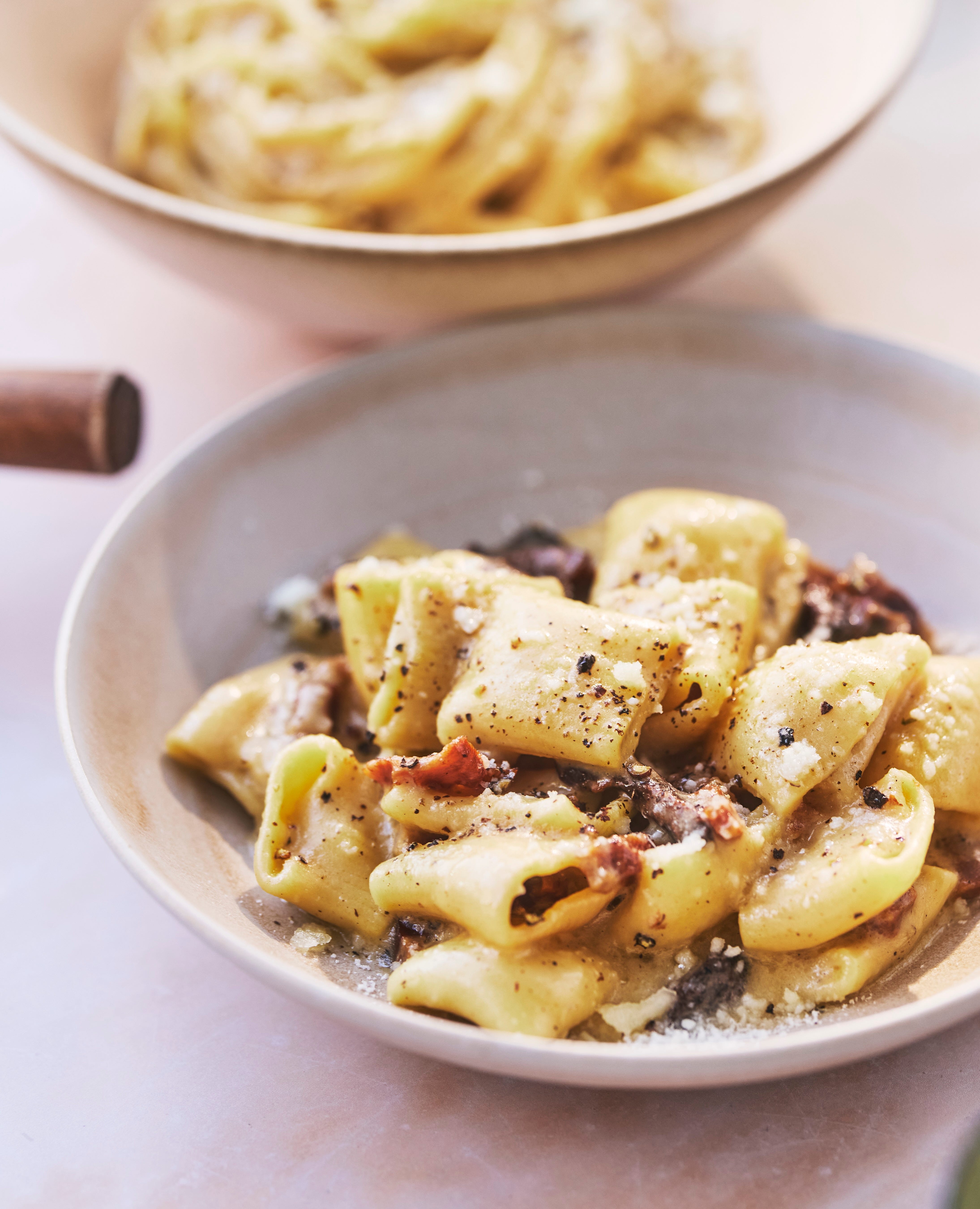
Rigatoni alla Gricia
Recipe excerpted from AMMAZZA! Culinary Adventures from New York to Italy and Back Again. Copyright © 2026 by Hillary Sterling. Reprinted by permission of Scribner, an Imprint of Simon & Schuster, LLC.
Alla Gricia predates Amatriciana (which adds tomato) and carbonara (which incorporates egg), making it the earliest iteration of the classic Roman pasta dishes—but it’s often the overlooked sibling. Some trace its name to Griciano, near Amatrice; others link it to the grici, Germanic food merchants in Rome. Guanciale is the star, so choose one with a firm yet pliable texture, creamy white fat, deep red meat, and minimal ingredients. I use a domestic, Italian-style black pepper–cured guanciale from La Salumina in Hurleyville, New York. Be patient and crisp it low and slow, like bacon—it will reward you with crispy meat and an explosion of moisture from the rendered fat in every bite.
Note: You can double the recipe; you’ll just need a bigger pan.
Serves 1
Kosher salt
2 ounces (60 g) guanciale or pancetta, rind removed, cut into ¼-inch-thick strips
1 tablespoon extra-virgin olive oil
Freshly ground coarse black pepper
5 ounces (140 g) rigatoni
3 tablespoons (45 g) cold unsalted butter, cubed
1½ tablespoons freshly grated Parmigiano-Reggiano, plus more for garnish
1½ tablespoons freshly grated Pecorino Romano, plus more for garnish
Bring a medium pot of water to a boil. Once boiling, generously salt the water.
In a separate small saucepan, bring 1 cup (240 ml) of water to a boil and set it aside. This unsalted hot water will be used to build the sauce.
Meanwhile, in a medium sauté pan, heat the guanciale and the olive oil over high heat. Once the guanciale starts sizzling, reduce the heat to medium-low and cook, stirring often, until the meat is browned and crispy and the fat is completely rendered, about 4 minutes.
Remove the pan from the heat. Pour off about one-quarter of the fat from the pan (reserve it for cooking eggs the next morning).
Add 6 grinds of pepper to the fat. Let them sit and absorb it until the oil starts to foam, about 1 minute.
Pour in ¼ cup (60 ml) of the reserved hot water, then set aside while you prepare the pasta.
Add the rigatoni to the boiling water and cook until al dente using the package directions as a guideline—but taste one for yourself.
Use a spider strainer to transfer the rigatoni to the pan, bringing a bit of the pasta water with it. Set the pan over high heat and bring to a boil. Add the butter and vigorously toss until the butter melts and creates a beautiful glossy coating on the pasta, about 1 minute.
Remove the pan from the heat, add a few more splashes of the reserved hot water, followed by the Parmigiano and pecorino, and vigorously toss until a smooth silky sauce hugs the pasta like a warm, cozy sweater, about 1 minute. If the pasta offers resistance while tossing, add a few more splashes of reserved hot water to loosen the sauce.
Transfer to a serving bowl and garnish with a bit more pecorino and Parmigiano.
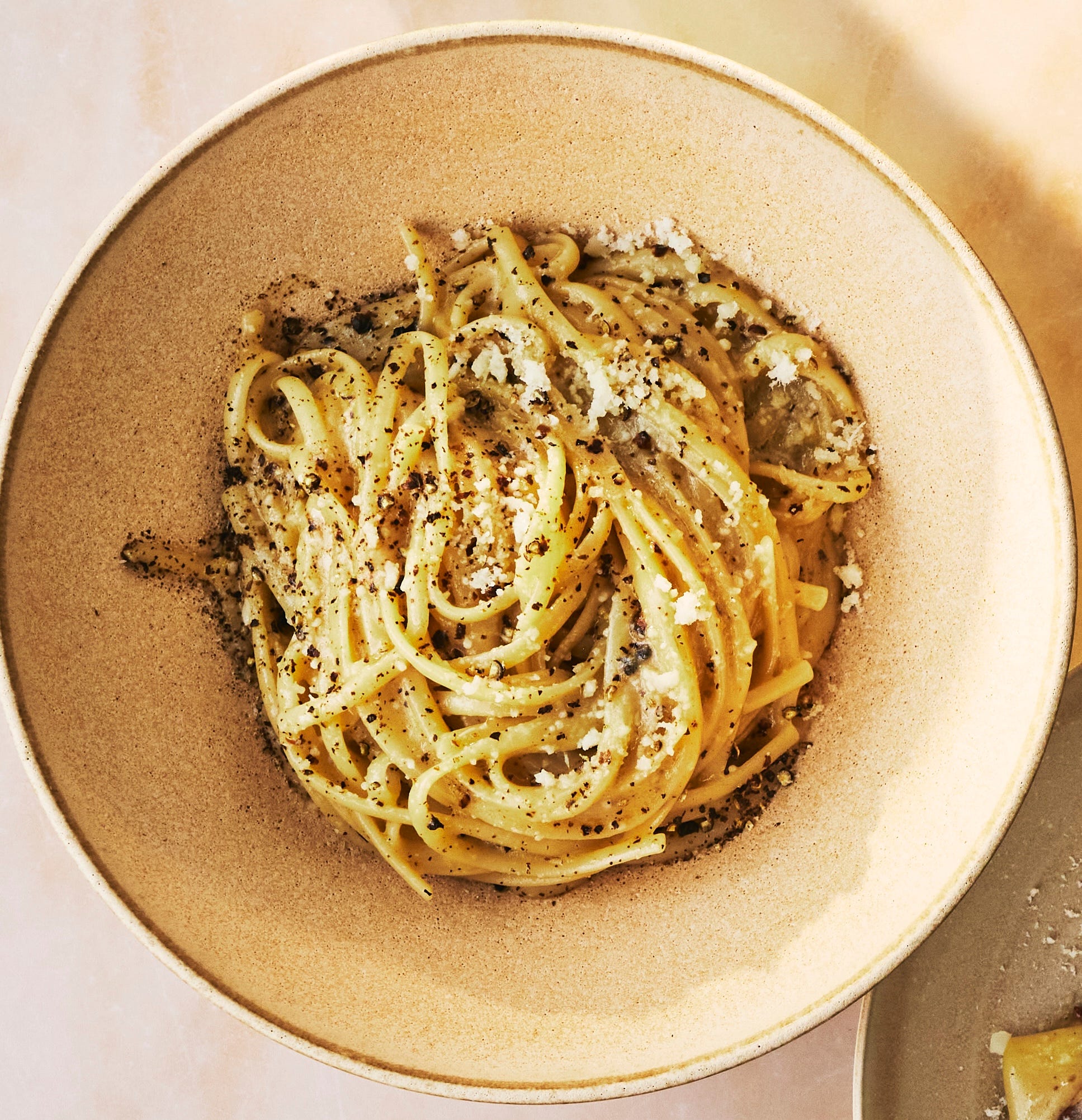
Linguine Cacio e Pepe
Recipe excerpted from AMMAZZA! Culinary Adventures from New York to Italy and Back Again. Copyright © 2026 by Hillary Sterling. Reprinted by permission of Scribner, an Imprint of Simon & Schuster, LLC.
Cacio e pepe traces its roots to Lazio’s shepherds, who relied on non-perishable staples—dried pasta, cacio (the regional name for aged Pecorino Romano), and black pepper—to sustain them during long stretches in the countryside. With just three ingredients, cacio e pepe is the epitome of simplicity, and a hard-won lesson in emulsification. For the home cook there will never be quite enough starchiness in your pot to rely on pasta water alone to emulsify the sauce, so butter helps move the process along.
In a few other departures from tradition, I use the sharpness and acidity of pecorino and balance it with Parmigiano-Reggiano’s sweet, nutty, creamy, familiar taste. I also believe the flat shape of linguine holds the sauce better than rounded spaghetti. Is that the craziest thing I’ve ever said? Maybe, but I stand by it.
Note: You can double the recipe; you’ll just need a bigger pan.
Serves 1
Kosher salt
Freshly ground coarse black pepper
1 tablespoon extra-virgin olive oil
5 ounces (140 g) linguine
3 tablespoons (45 g) cold unsalted butter, cubed
¼ cup (22 g) freshly grated Parmigiano-Reggiano Reggiano
¼ cup (22 g) freshly grated Pecorino Romano
Bring a medium pot of water to a boil. Once boiling, generously salt the water.
In a separate small saucepan, bring 1 cup (240 ml) of water to a boil and set it aside. This unsalted hot water will be used to build the sauce.
Meanwhile, add 30 grinds of pepper to a medium sauté pan. Place the pan over medium-low heat and toast, stirring constantly, just until you begin to smell the sweet fragrance and familiar warmth of the pepper, 1 to 2 minutes. The contrast of black pepper against white pasta makes this dish striking. Be warned: Overtoasting ground pepper will turn the sauce light gray, so never walk away from the pan.
Remove the pan from the heat and add the oil to the pepper. Let it sit and meld until the oil starts to foam, about 1 minute. Add ¼ cup (60 ml) of the reserved hot water, then set aside while the pasta cooks.
Add the linguine to the boiling water and cook until al dente using the package directions as a guideline—but taste one for yourself.
Use tongs to transfer the pasta to the pan, bringing a bit of the pasta water with it. Set the pan over medium-high heat and vigorously toss with a few splashes of the reserved hot water and the butter until the butter melts and coats the pasta, about 1 minute. Remove the pan from the heat.
Add a few more splashes of the reserved hot water, followed by the Parmigiano and pecorino and vigorously toss the pasta until a smooth silky sauce hugs the pasta, about 1 minute. Transfer to a serving bowl garnish with more cracks of black pepper and eat hot!
I was driving in the car listening and I was like “ oohh .. I need to listen to this again, so many little tips I need to jot down!” Can’t wait to get the book, tomorrow… seems like forever. 😀
Okay these pastas look amazing, but what I'm really floored by is how wonderful it is for a professional chef to share the reality that at home, pre-cleaned veggies can be a big freaking help!!!