

Omi Hopper Cooked Through the Hardest Year of Her Life to Get Here
The Next Level Chef contestant shares the Puerto Rican recipes that got her family through tough times.

This email is packed with recipes and might be too long for your inbox; click here to view online.
Omi Hopper was working as a makeup artist when her husband was diagnosed with a degenerative bone disease and laid off from his job. Just before the start of the pandemic, she took a leave of absence to help him through his first of two knee replacement surgeries, and money was tight.
“We were trying to figure out, how are we going to get groceries?” she tells me in this week’s podcast episode. “Our church was paying for our rent. It was that bad.”
Omi says she “couldn’t see a light at the end of the tunnel,” and feeding teen sons many meals a day while they attended school over Zoom was truly overwhelming.
“I really wanted just a way to connect with the outside world,” she says, but doing makeup tutorials felt pointless when no one was leaving the house all that much.
“I went to the parking lot of a local Stop & Shop,” she says, “and it was almost like my last plea of a prayer, of just saying, ‘I can’t handle this anymore. I can’t hold this on my shoulders anymore.’”
She picked up what she could to cook a meal that might last a few days, and turned on her phone camera, signing into her makeup studio’s Instagram account. She’d never posted anything about food there before, but she found herself saying, “Hey, I’m about to make sancocho. Does anybody want to cook with me?”
And that’s how Cooking con Omi was born.
I asked Omi why she thinks so many people gravitated toward her cooking videos—an audience that would eventually help her get a spot on Gordon Ramsey, Nyesha Arrington, and Richard Blais’s TV series Next Level Chef.
“It wasn’t the food,” she explains. “It was a memory.”
She’d get messages from a father, saying “you’re helping me to cook for my boys what my wife used to cook before she passed away from cancer.” She’d get notes from mothers and daughters, saying “you are helping our relationship, our bond be closer because we’re making these recipes.”
Omi’s new book highlights “the dishes that really feel like a welcome home for any Puerto Rican that’s here in the diaspora,” including essentials like her habichuelas guisadas, the stewed beans she makes several times every week.
You’ll find the recipe for those beans (plus white rice, of course) if you scroll down, and a chance to win a copy of the book. But please do tune into the episode for my whole conversation with Omi.


🥇 The easiest way to enter to win a copy of Cooking con Omi is to sign up as a paid subscriber to this newsletter by end of day Sunday, August 9, 2026.
🥈 Free subscribers can enter the giveaway, too. Just send in a “what’s in my fridge right now” voice memo for us to play on The Dinner Plan podcast. My cookbook author guest will come up with a dinner idea just for you based on the real stuff you have around. Follow the instructions here by end of day Sunday, August 9, 2026.
Winner will be alerted by Substack DM and email. 18+, U.S. and Canada addresses only. Giveaway not sponsored or administered by Substack. Ends Aug 9, 2026. Commissions from affiliate links in this newsletter help to keep this project going.

Omi mentioned:
Doña Connie’s tacos (Today.com)
Sancocho (Youtube)
Pollo Guisado (TikTok)
Bistec encebollado (IG)
Guava bacon jam (IG)
Guava-glazed ribs (IG)
Pina colada punch with pineapple (TikTok)
Mae’s mac and cheese (TikTok)
Yellow rice and beans (Ebony)
Grandmother’s Pasteles (Youtube)
Next Level Chef cast on IG: Tini Younger, Cassie Yeung, Matt Groark, Shay Spence, Reenie Karim
Giovanna Huyke’s Lo Mejor de Mi Cocina
From the ad break:
Une Femme Wines: Use code DINNERPLAN for 20% off. Must be 21+
Straus Family Creamery: Find Straus organic ice cream at Whole Foods nationwide or at strausfamilycreamery.com.
Made In Cookware: Visit madein.cc/dinnerplan to unlock your discount offer.
Check out Food Friends on Substack, Apple Podcasts, or Spotify.
Maggie mentioned:
Louie Salad from Chris Kronner’s A Burger to Believe In

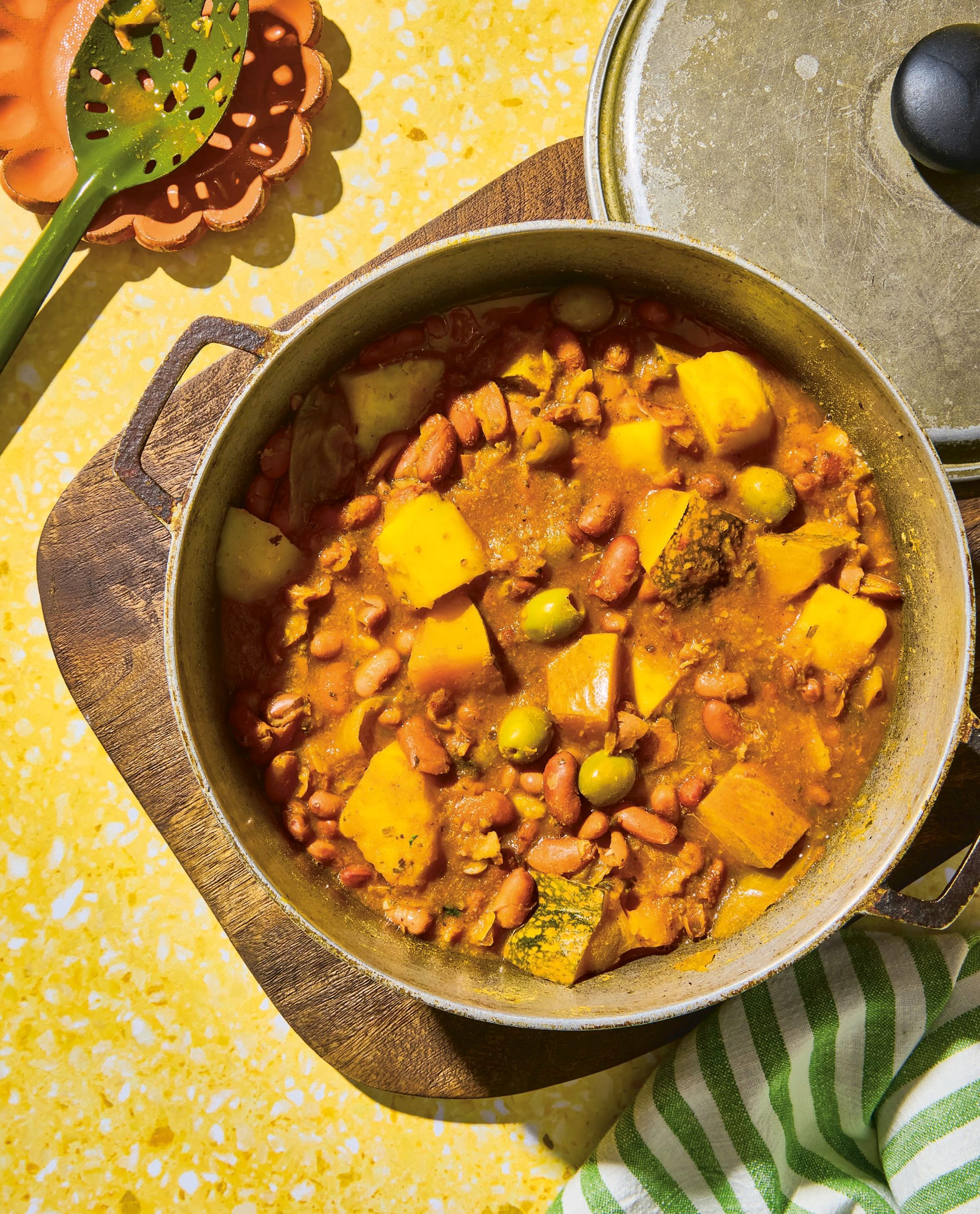
Habichuelas guisadas / Stewed beans
Reprinted with permission from Cooking con Omi: A Love Letter to Puerto Rican Home Cooking. Copyright 2026 by Cooking con Omi, LLC. Published by Ten Speed Press, an imprint of the Crown Publishing Group, a division of Penguin Random House LLC, New York.
You can’t call yourself Boricua if you don’t have habichuelas guisadas on the regular. These stewed beans are almost as essential to Puerto Rican cuisine as sofrito and white rice. It’s such a staple that even if you’ve made the juiciest meat or stew, serving it with a side of rice on its own is never enough. It’s like having a peanut butter and jelly sandwich without the jelly—you need those habichuelas to complete the plate. I make this recipe at least four times a week; my boys can’t get enough of it.
Omi Tip: If time is of the essence, you can skip soaking dried beans and simply use two 15-ounce cans of beans. I don’t drain or rinse them, but you can—it’s a matter of preference.
Makes 4 to 6 servings
1 cup / 160g dried pink beans
1 cup / 160g dried red beans
1 medium onion, quartered
1⁄4 green bell pepper
3 garlic cloves
1 bay leaf
2 tablespoons Achiote oil (see below)
½ cup diced smoked ham steak
¼ cup / 60ml Mi Sofrito Fresquecito (see below)
1 teaspoon Better Than Bouillon or 1 chicken bouillon cube
1½ tablespoons tomato paste
1 large russet potato, peeled and diced
½ cup/60g peeled and diced Caribbean pumpkin (calabaza) or acorn squash
8 to 10 pimiento-stuffed green olives, halved
1 teaspoon Sazón (see below)
1 tablespoon Adobo (see below)
1 teaspoon dried oregano
Kosher salt and freshly ground black pepper to taste
Chopped cilantro, for garnish (optional1)
Rinse the pink and red beans and soak them in 4 cups / 950ml of water overnight. Drain and rinse before cooking.
In a large pot over medium-high heat, add the soaked beans and 4 cups / 950ml of fresh water. Add the onion, bell pepper, garlic, and bay leaf. Bring to a boil, then reduce the heat to low and simmer for about 1 hour, or until the beans are tender and can be pierced easily with a fork. Remove from the heat and set aside. (Don’t drain—you’ll use the cooking liquid later.)
In a separate large pot over medium heat, add the achiote oil and heat until it shimmers. Stir in the diced smoked ham, sofrito, bouillon, and tomato paste and cook for 2 to 3 minutes, until fragrant and darkened in color.
Add the potato, calabaza, olives, and cooked beans with their liquid. Stir in the sazón, adobo, and oregano and mix well to combine. Pour in 1 cup / 240ml of water, if needed, to submerge the beans and all the vegetables. Reduce the heat to medium-low and cook for 20 minutes, or until the vegetables are tender.
Taste and adjust the seasoning with salt and pepper as needed. Garnish with cilantro, if desired. Serve hot with white rice and enjoy!
Garlic paste and Achiote oil
When you want garlic paste, simply grab a few of the garlic confit cloves and mash into a smooth paste in a pilón (mortar and pestle). This can be used in any dish that you’d like to infuse with a rich, garlicky flavor. I’ve combined the garlic paste recipe with the recipe for achiote oil, something I use to add color and flavor to rice, stews, and other dishes, with the garlic paste, since I make the achiote oil with the oil that’s left over from infusing the garlic. Two recipes in one!
Makes 1¼ cups / 300ml garlic paste and 1¾ cups / 415ml achiote oil
Garlic Paste
2 cups / 300g garlic cloves, peeled
2 cups / 480ml avocado oil or vegetable oil, plus more as needed
1 teaspoon kosher salt
1 teaspoon dried thyme (optional)
1 teaspoon dried rosemary (optional)
Garlic-Infused Achiote Oil
1¾ cups / 415ml oil left over from Garlic Paste, or avocado oil or vegetable oil
½ cup / 55g achiote seeds (annatto seeds)
To make the garlic paste: Preheat the oven to 300°F/150°C. Place the garlic cloves and the avocado oil in a small, oven-safe saucepan, ensuring the garlic is fully submerged in the oil. Add more oil if needed. Add the salt and the thyme and rosemary, if using.
Place the saucepan in the oven and bake, uncovered, for
45 minutes to 1 hour, until the garlic cloves are soft and tender. Remove from the oven and set aside to cool.
Once it’s completely cool, drain the garlic cloves (reserving the oil) and transfer to a blender. Blend to a paste with 1⁄4 cup/ 60ml of the oil, reserving the remaining 1¾ cups / 415ml of the oil for the achiote oil.
Store the garlic paste in the refrigerator for up to 3 weeks, but do not freeze, as it will lose its flavor.
To make the achiote oil: In a saucepan over low heat, add the strained garlic-infused oil and the achiote seeds and cook, stirring occasionally, until the oil takes on a deep orange-red color, about 10 minutes. Be careful not to overheat or burn the seeds. Remove from the heat and let cool slightly.
Strain the oil to remove the achiote seeds. Discard the achiote seeds and transfer the achiote oil to a clean jar or bottle. Store in a cool, dry spot on your countertop for up to 1 month.
Mi Sofrito Fresquecito
Omi Tip: Feel free to double this recipe if you have a larger family like mine, or if you’ll be cooking larger quantities.
Makes 3 cups
1 large yellow onion, roughly chopped
1 bunch cilantro with stems
1 bunch culantro (recao)
1 red bell pepper, roughly chopped
1 green bell pepper, roughly chopped
1 large head of garlic, peeled
5 to 10 ajíes dulces (Puerto Rican sweet peppers), deseeded and roughly chopped
¼ cup / 60ml extra-virgin olive oil
In a food processor, add the onion, cilantro, culantro, bell peppers, garlic, ajíes dulces, and olive oil. Placing the onion in the food processor first will provide you with enough water to help process the rest of the ingredients. Process the mixture until very finely chopped, resembling the consistency of chimichurri. Whatever you do, please don’t try to process each vegetable individually, because it will change the flavor of your sofrito.
Pour the mixture into a large quart jar container and set aside.
Store the sofrito in the fridge for up to 1 month, or freeze in ice cube trays for easier access. If you freeze in a completely sealed container, the sofrito can last for 3 to 6 months.
Sazón
As a staple in most savory Puerto Rican dishes, this vibrant dry seasoning blend is used to add our signature color, warmth, and depth of flavor to meats, poultry, seafood, rice, beans, and stews.
Makes 1¾ cups
¼ cup / 24g ground coriander
¼ cup / 24g ground cumin
¼ cup / 28g ground turmeric
¼ cup / 24g ground achiote seeds (annatto seeds) or paprika (for color)
¼ cup / 36g garlic powder
¼ cup / 36g onion powder
2 tablespoons dried oregano
2 tablespoons kosher salt
1 tablespoon freshly ground black pepper
In a bowl, combine the coriander, cumin, turmeric, ground achiote or paprika, garlic powder, onion powder, oregano, salt, and pepper. Mix well to ensure all the spices are evenly distributed.
Transfer the sazón to an airtight container or spice jar and store in a cool, dry place for up to 6 months.
Adobo
Adobo seasoning, a premixed dry spice blend, is perfect for marinating meats, poultry, and seafood. Simply rub the seasoning onto the protein and let it sit for at least 30 minutes before cooking. You can also sprinkle adobo on vegetables before roasting or grilling for added flavor. ¿Cuánto? La cantidad que te diga tú corazón.
Makes about 2½ cups
½ cup / 70g garlic powder
½ cup / 70g onion powder
½ cup / 40g dried oregano
2 tablespoons ground cumin
2 tablespoons ground coriander
2 tablespoons white pepper
2 tablespoons freshly ground black pepper
½ cup / 70g kosher salt
2 tablespoons paprika (optional, for color)
2 tablespoons turmeric (optional, for color)
In a large bowl, combine the garlic powder, onion powder, oregano, cumin, coriander, white pepper, black pepper, salt, and the paprika and turmeric, if using. Mix well to ensure all the spices are evenly distributed.
Transfer the adobo to an airtight container or multiple spice jars and store in a cool, dry place for up to 6 months.
Arroz blanco / White rice
Reprinted with permission from Cooking con Omi: A Love Letter to Puerto Rican Home Cooking. Copyright 2026 by Cooking con Omi, LLC. Published by Ten Speed Press, an imprint of the Crown Publishing Group, a division of Penguin Random House LLC, New York.
White rice in Puerto Rican cuisine is almost on the level of sofrito—you need it for practically every main dish. Growing up, I watched my abuela and Mami in action in the kitchen all the time, but neither of them allowed me to cook with them, so by the time I left the nest at eighteen, I knew how to take care of myself but had never really cooked. It wasn’t a big deal when I was single, but once I met my future husband, a sense of pride hit me, and I wanted to show him that I had sazón. I decided to start with the basics: arroz blanco con habichuelas guisadas. On my first try, my rice was so soggy that it resembled arroz con dulce, without the flavor. (Whatever you do, once your rice is cooking in the pot with water, for the life of you, DO NOT stir the rice! I learned that the hard way.) The next time, I burned my rice.
I needed to get it right, so I frantically called Mami: “I don’t know what I did, but it’s not coming out right—help me, please!” And she replied, “Tienes que practicar si te quieres casar,” telling me I had to practice cooking if I wanted to get married. After a few more attempts with Mami’s over-the-phone guidance, I finally mastered this essential side dish and eventually became the person who brought the rice to family or church functions in Rhode Island. And I married my guy, so maybe Mami was right!
Omi Tip: If you choose to make short-grain rice (instead of medium-grain), use 1¼ to 1½ cups / 300ml to 360ml of water for 1 cup of rice. And if you prefer long-grain rice, then go with 2 cups / 480ml of water. If you double the rice, double the water and you’ll be good to go. Just resist the urge to overstir!
Makes 4 servings
¼ cup / 60ml avocado oil
½ teaspoon kosher salt
1 cup / 200g medium-grain white rice, rinsed until the water runs clear
In a large pot or caldero over high heat, add the oil, salt, and 1⅓ cups / 315ml of water and bring to a boil.
Once the water is boiling, add the rinsed rice to the pot and stir well, just one time.
Let the rice cook, uncovered, until it has absorbed most of the water, 10 to 12 minutes.
Reduce the heat to low, cover the pot, and continue to cook for about 25 minutes more. To get the pegao (the crispy browned layer on the bottom), let the rice sit on low heat for a few extra minutes without stirring to allow the layer to form.
Uncover the rice and fluff it with a large spoon. Then remove the rice from the pot and scrape the pegao off the bottom. Serve as a side or top with beans. A forkful of pegao dipped in habichuelas broth ¡no tiene precio!



Feel free to skip this if you’re avoiding fresh cilantro due to the current Cyclospora outbreak in the US.
Yum, time to make stewed beans
Gorgeous recipe. So much care.