

Cook a Lebanese Feast With Anissa Helou
My conversation with the cookbook icon.

This newsletter is The Dinner Plan’s recipe dispatch and weekly cookbook giveaway. But the full conversation is only on the podcast. Today’s episode was recorded on February 24, before the recent military escalation in Lebanon.
In 1994, Anissa Helou published her first book on Lebanese cooking, which included 250(!) recipes. She followed that book with the James Beard award-winning Feast: Food of the Islamic World, plus books on sweet and savory baking, Mediterranean street food, and numerous others. Now, 31 years after her debut cookbook, Anissa has written a new volume on the food of Lebanon. It couldn’t be more different.
The first book shared recipes Anissa learned from her mother, whose notes always wrapped up with the admonishment: “cook until done.”
At the time, Anissa writes in the introduction to Lebanon, she “never questioned” whether her mother’s go-to dishes from a Maronite community in the mountains “were anything but national dishes, mainly because our country is so small (about half the size of New Jersey.” When she transcribed her mother’s cooking for that first book, Anissa hadn’t been back to Lebanon for a decade of war years.
But when she returned to do research for her subsequent books, it became clear that there is no single Lebanese cuisine, and each region’s food varies widely. For this new book, she aimed to learn more about as many regions as possible, eating at friends’ houses and asking for introductions, ducking into kitchens at hotels and bakeries. “It was very much on-the-ground, in-the-field type of book,” Anissa tells me.
There were surprises: in the south, the mana’ish, a quintessential Lebanese flatbread served at breakfast, were topped not only with za’atar and onion, but also with a tomato, onion, and walnut salad.
Anissa had always assumed that tabbouleh meant one thing. “I get really pissed off,” she says, “when the name of a dish become a kind of generic term, you know, for all kinds of preparations that don’t have anything with the original dish.”
But during her travels, she encountered “lots of regional tabouleh recipes in Lebanon,” including one with confit lamb “that I didn’t know anything about and had never tasted.”
As the weather warms, I’ll be paging through this book’s grilling recipes. “In the old days, and maybe still now in the rural areas, Sunday was grilling day,” Anissa says. The grilled lamb or kefta or pieces of chicken are piled onto bread, “so that the bread soaks up the juices. And that’s quite delicious,” she recalls. “And then they would have dips and salads and then fruit at the end. And that would be the Sunday meal. It’s like the Sunday roast in England, but the Sunday grill in Lebanon.”
You’ll find Anissa’s recipe for grilled chicken wings marinated with cinnamon and allspice if you scroll down, but do tune in (or save this episode on your favorite listening app) for Anissa’s memories of her grandmother’s cooking, her prep-ahead menu for hosting friends, and the cookbooks she admires most.
Win a copy of Lebanon

There are two different ways to enter this week’s cookbook giveaway:
🥇 Sign up as a paid subscriber to this newsletter by end of day Wednesday, March 18, 2026. That’s all you need to do. Becoming a paid subscriber also gives you access to The Dinner Plan’s new list of 47 spring dinners you didn’t have to think of.
🥈 Free subscribers can enter too! Just send in a “what’s in my fridge right now” voice memo for us to play on the podcast. An upcoming guest will devise a dinner plan based on what you have around. Follow the instructions here by Wednesday, March 18, 2026.
Giveaway winner will be alerted by Substack DM and email. 18+, U.S. addresses only. Giveaway not sponsored or administered by Substack. Ends March 18, 2026. This send includes affiliate links; commissions from your purchase help to keep this newsletter going.
Anissa mentioned:
Nevin Halıcı’s Turkish Cookbook (eBay here), especially the Kısır (bulgur wheat salad). Anissa also wrote about Nevin here.
Margaret Shaida’s The Legendary Cuisine of Persia by Margaret Shaida (Bookshop / Thriftbooks), especially the tadig
Zette Guinaudeau-Franc’s Traditional Moroccan Cooking (Thriftbooks)
From the ad break:
Rouxbe Online Culinary School: Get 30% off your first course with code DINNERPLAN30
Find Bethlehem by Fadi Kattan on Bookshop, Amazon, or your local bookstore.
Made In Cookware: Head to madein.cc/dinnerplan to unlock your discount offer.
Find In the Test Kitchen wherever you listen to podcasts and on Netflix.
Maggie mentioned:
Hugh Fearnley-Whittingstall’s mushroom soup from How to Eat 30 Plants a Week (he calls it the Shroomami Stoup.)
A NOTE FROM OUR SPONSOR

On busy nights, the last thing you want to do is stand at the sink washing dishes before they go in the dishwasher. Dirty Labs makes a non-toxic 2-in-1 Dishwasher Detergent + Booster that’s designed to outclean conventional detergents, without the harsh chemicals. You can skip the pre-rinse, and everything comes out clean, with no soapy residue.
Use code THEDINNERPLAN to get 15% off your first order.
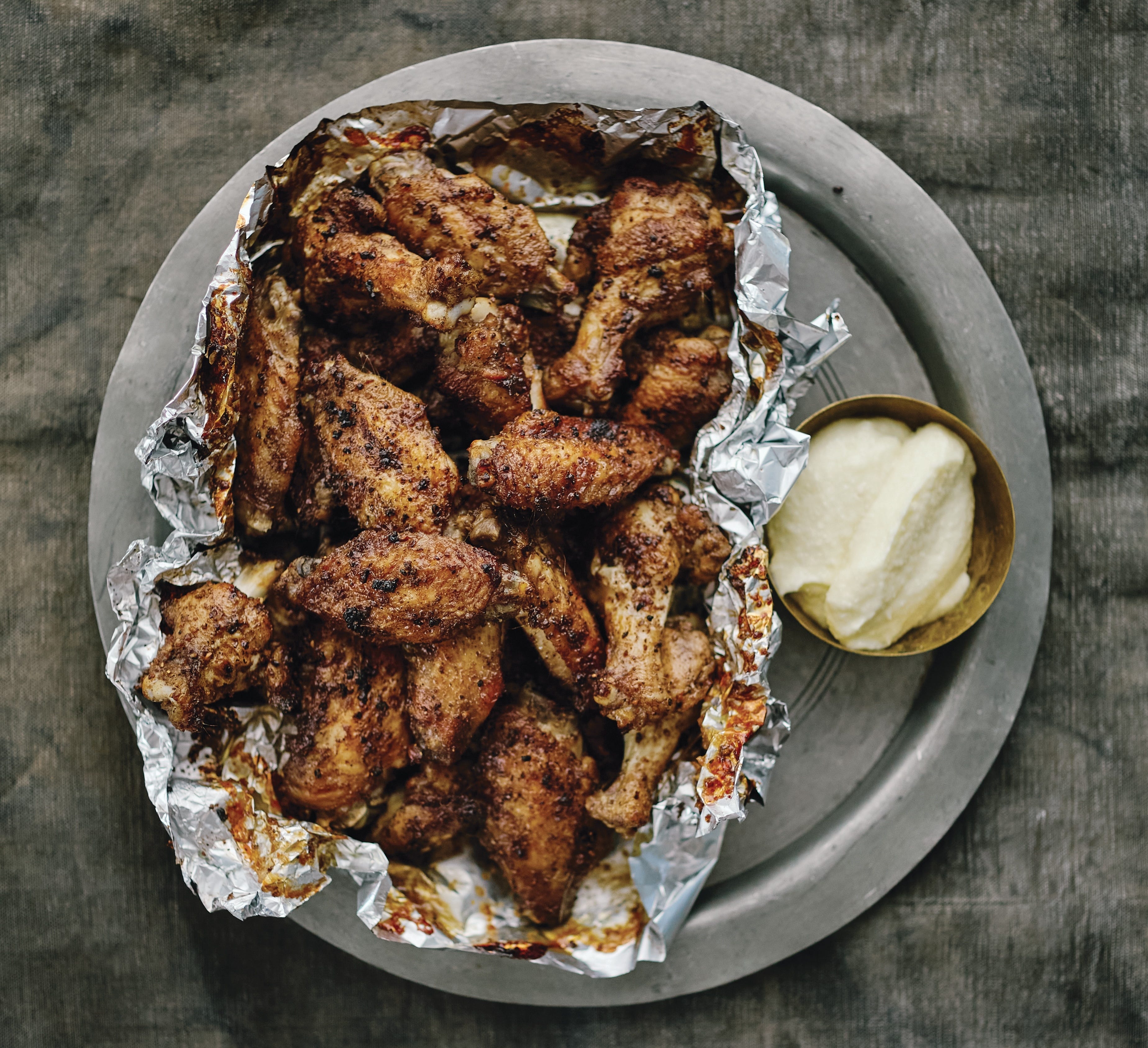
Barbecued Chicken Wings
From Lebanon by Anissa Helou. Copyright © 2026 by Anissa Helou. Excerpted by permission of Ecco, an imprint of HarperCollins Publishers.
An essential part of our mezze, the wings in this recipe are always cut into two pieces, one fat drumstick-like part and the other flat. The tip end is discarded. I try to buy organic wings, and I choose them not too large. As I don’t have a barbecue, I roast them in the oven at a high enough heat so the edges crisp up as if they were grilled on a live fire. Of course, the slightly charred flavor is not there, but they cook more evenly than under the broiler and they are still extremely moreish. These make a delightful quick lunch, served alongside a salad or a dip. And, of course, they are perfect as part of a mezze spread, served with tüm (see recipe below.)
Serves 4
For the marinade:
8 large cloves garlic, peeled, minced to a fine paste
2 tablespoons (30 ml) extra virgin olive oil
Juice of 1 lemon, or to taste
¼ teaspoon ground cinnamon
½ teaspoon ground allspice
¼ teaspoon seven-spice mixture (see below for recipe)
¼ teaspoon finely ground black pepper
½ teaspoon Aleppo pepper
Sea salt
12 small free-range organic chicken wings (about 800 g)
Method:
Put the ingredients for the marinade in a large mixing bowl and mix well. Add the chicken wings and mix well so all the wings are evenly coated with the marinade. Let sit for a couple of hours in the refrigerator, stirring every now and then.
Prepare a barbecue fire if you have one, or preheat your broiler to the maximum, or your oven to 450°F (220°C).
If you are barbecuing or broiling the wings: Grill for 10 to 15 minutes on each side, until crisp and charred in some places but still moist inside.
If you are roasting them in the oven: Roast for about 30 minutes, until they are crisp and completely done. Serve hot with tum and pita bread.
Seven-Spice Mixture (Sabe’ B’harat)
From Lebanon by Anissa Helou. Copyright © 2026 by Anissa Helou. Excerpted by permission of Ecco, an imprint of HarperCollins Publishers.
The quintessential Lebanese spice mixture that is made of seven different spices—sabe’ meaning seven. It varies slightly from region to region and from family to family. Here is the one I make.
Makes just over ½ cup
2 tablespoons finely ground black pepper
2 tablespoons ground allspice
2 tablespoons ground cinnamon
2 teaspoons ground coriander
2 teaspoons ground cloves
2 teaspoons ground ginger
2 teaspoons freshly grated nutmeg
Put all the spices in a small mixing bowl and mix well. Store in an airtight glass jar in a cool, dark place.
Tüm
From Lebanon by Anissa Helou. Copyright © 2026 by Anissa Helou. Excerpted by permission of Ecco, an imprint of HarperCollins Publishers.
Tüm is an essential accompaniment to grilled chicken, grilled quail, and chicken shawarma. It is also served with our goat or lamb tartare (habrah nayeh, which is like kibbeh nayeh but without the bulgur wheat and spices), and in some restaurants, it is served with large beefsteak tomatoes that are cut across in half and sprinkled with sumac. Before the economic crisis, most restaurants served these at the beginning of a meal with nuts and seeds and the obligatory crudite platter, but these days the initial complimentary offering is kept to a minimum. Anyhow, they are served as an appetite opener before any of the mezze is brought in.
I like dipping Persian cucumbers in tüm to have as a snack, but whichever way you have it, you are bound to have a strong garlicky breath for a good twenty-four hours after you eat it. Still, garlic is reputed to be healthy, and as long as you share this dip with those you will be spending time with afterward, there is no need to worry about your garlic breath.
Traditionally, this dip is made with only garlic, lemon juice, and oil (vegetable oil in restaurants and extra virgin olive oil at home). Many restaurants use citric acid instead of lemon juice to preserve the dip longer, but I don’t. This said, it will keep for a few days in the fridge in an airtight container. If you find the taste too strong, add a little labneh or mashed potatoes.
Serves 4
20 large cloves garlic, peeled, brown ends sliced off and discarded
½ teaspoon fine sea salt, or to taste
1 cup (250 ml) extra virgin olive or vegetable oil, or a mix of both, plus more if needed
Juice of ½ lemon, or to taste
Labneh to taste to soften the sharpness of the dip, if needed
Put the garlic and salt in a food processor and process until as smooth as you can get it, scraping the sides with a spatula every now and then.
Slowly drizzle the olive oil through the open part of the lid while still processing as if you are making mayonnaise. The garlic paste will eventually emulsify with the oil to become fluffy without the need to add an egg yolk—some chefs add a little whipped egg white to make the dip whiter and fluffier.
Once you have used up all the oil and the dip is completely fluffy, drizzle in the lemon juice, with the blade still turning. Finish with one or two ice cubes with the blade still turning. Taste and adjust the sharpness if needed—if it’s too pungent, drizzle in up to an extra ¼ up (60 ml) oil and whisk in a little labneh.
Keep in a glass jar for later or transfer to a bowl to serve with chicken wings, kebabs, or whatever else takes your fancy.


Anissa is iconic - I'm so excited for this book!
Oooh these wings look amazing!!