

1500 Recipe Tests Later, Ella Quittner Knows the Best Way to Cook Everything
Learn about her delightfully silly dinner tradition and get the recipe for a superlative lasagna that's definitely not a lasagna.

When Ella Quittner tells me what she was up to last week, I’m somehow not at all surprised.
She’s a member of a group that calls themselves The Souffladies. They meet up monthly (or so) to cook a full meal of soufflés. Most recently, they whipped up a French onion soup version with a gruyère soufflé base, a pour of onion soup into the center, and a creamy French onion dip on top.
“We’re all people who should be incredible at making soufflés,” Ella says, “But we show up and kind of go into a panic as if we’ve never done it before, and consult like 30 recipes and discuss all the options, and how finely we should be grating the cheese and stuff.”
They’re committed to the bit: Each Soufflady brings a bottle of Prosecco and they conduct the proceedings in a silly voice. (I regret to say I couldn’t convince Ella to demonstrate when she visited the studio.) “It’s a very fun and weird Prosecco-saturated commitment,” she says.
In other words, slightly (or fully) obsessive behavior around cooking is Ella’s kind of fun.
You can see it on every page of her new cookbook, Obsessed With the Best, which Ella estimates required around 1500 recipe tests in all. Each section of the book starts by focusing on fundamental technique; for example, she compares poaching room-temp eggs with cold ones, and using a sieve vs. a slotted spoon. She poaches eggs in milk! And chicken stock!
She ultimately lands on preferred methods, but Ella’s goal is really to get people comfortable with all the different levers you can pull as you’re cooking.
She’d always read stories on Serious Eats and America’s Test Kitchen, “because for those of us who are culinary nerds, who are just curious, even if it’s a dish I don’t even want to cook myself, I would still click a story like that because I do want to read about different ways to achieve different things.”
“I think the end goal,” Ella notes, “is always flexibility and knowing how to do exactly what I want to do without a roadmap. And so I think of it almost like building blocks.”
I wondered if it felt uncomfortable to pronounce something the best, but Ella is clear on that: “I’m not saying the best way to make pancakes for everyone all the time is this way. I’m saying I set out to make pancakes that are super soft and custardy and pillowy and plush, but have these crisp butter drenched edges. And that was my goal. So I tested a million different ways to get there. And here’s what I think you should do if you also want that. But I think it would be a huge mistake to say like point blank, this is how pancakes should be. That’s ridiculous.”
Her aim with the book, she says, “was really to design recipes where, you know, they’re teaching people techniques. So, after you cook through them once or twice, I want you to feel really free to go off-piste. Like, you’ve learned what I’m trying to teach you in terms of this technique produces this result, or these couple of results, in an efficient, effective way. Now play with the flavors. Now play with the ingredients. Now play with the cooking time or finish it under your broiler, or take this out, or add this in, or top this soup with crumbled Cheez-Its.”
She says that’s how she cooks at home, often following people’s recipes “so that I can learn to become a more proficient cook or baker. And then I will completely freestyle from there. And I think that’s the most fun way to be in the kitchen because it teaches you that you are the person who can satisfy your cravings.”
In this week’s podcast conversation, Ella shares one game-changing pantry staple that’s worth adding to your cupboard, the surprising results of her smashed potato trials, and a lot of advice on how to roast the most flavorful juicy and crispy-skinned chicken.
We also chatted about Ella’s riff on a Marcella Hazan dish that layers sweet leaves of savoy cabbage with bechamel and cheese. “It’s very much not a lasagna,” Ella explains—though she actually won a lasagna-cooking contest by making it.
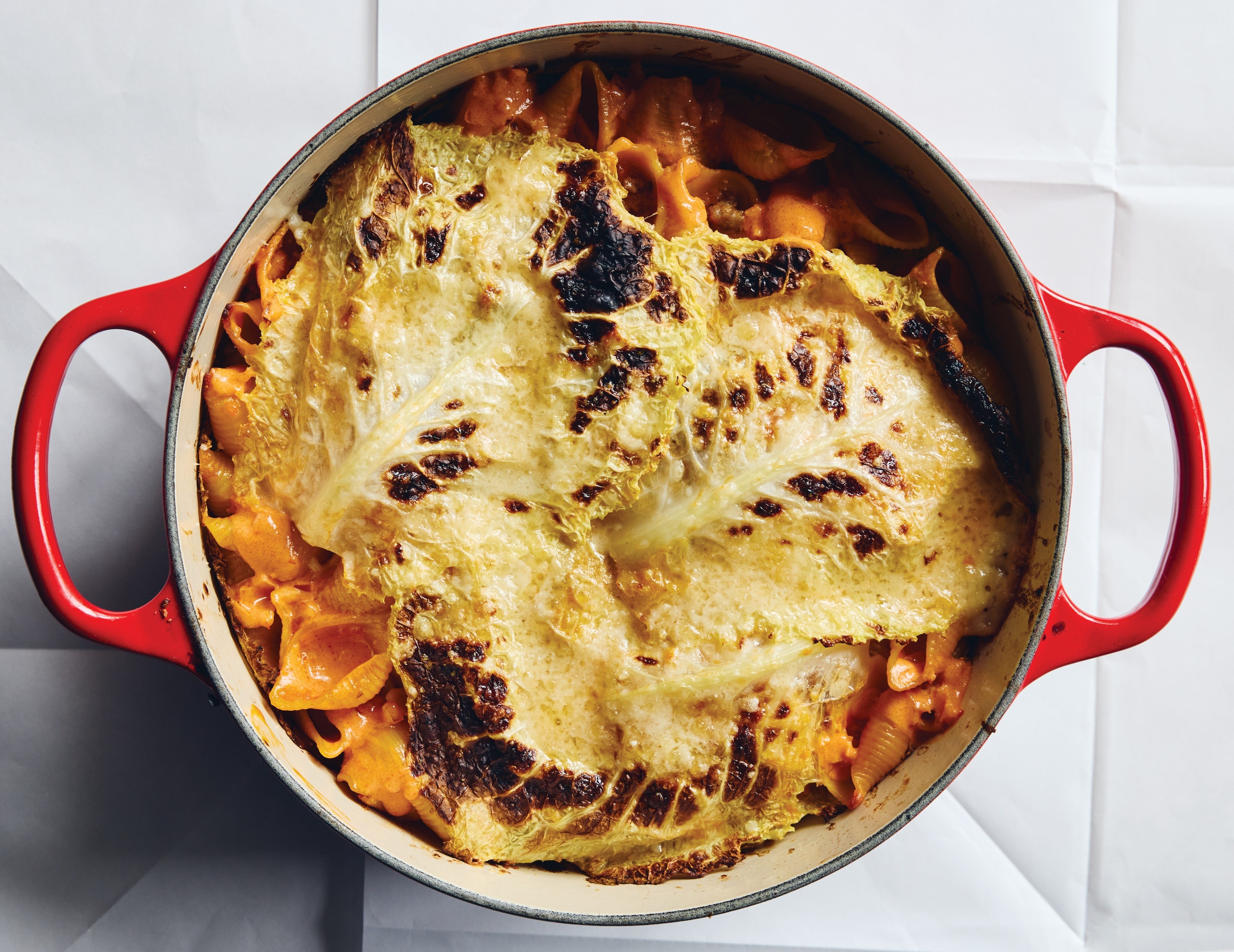
These days, she marries that version with her carefully dialed-in vodka sauce, keeping the cabbage but adding sausage and shell noodles: “So in between each layer, you get almost a baked ziti texture, but a little bit meatier.”
“Oh my God,” Ella says, “It’s absolutely one of my favorite things to make in the winter.”
You can get that recipe by scrolling down. But I’m not sure I’ve done justice here to all the facets of this week’s conversation, so I highly recommend that you hit ‘follow’ on your go-to podcast app so you can listen for yourself—and not miss all the episodes coming your way as we get into the biggest spring season for new cookbooks that I can recall.
Win a copy of Obsessed With the Best

Want to add Obsessed With the Best to your collection? I really want that for you, too. There are two ways to enter this week’s giveaway:
🥇 This one’s easy: Sign up as a paid subscriber to this newsletter by end of day Sunday, March 1, 2026. That’s all you need to do. Becoming a paid subscriber also gives you access to the 99+ Dinner Ideas list and this winter dinners edition, plus the full list of every cookbook recommended on The Dinner Plan so far.
🥈 Here’s how free subscribers can enter: Just send in a “what’s in my pantry/fridge/freezer right now” voice memo for us to play on The Dinner Plan podcast. An upcoming guest will devise a dinner idea just for you based on what you have around. Follow the instructions here by end of day Sunday, March 1, 2026.
Giveaway winner will be alerted by Substack DM and email. 18+, U.S. and Canada addresses only (sorry!). Giveaway not sponsored or administered by Substack. Ends March 1, 2026.
This send includes affiliate links; commissions from your purchase help to keep this newsletter (and the weekly podcast) going.
Ella mentioned:
The Souffladies recommend this Serious Eats guide to soufflés
Cold-Oven Chicken (Food52)
Shiitake mushroom powder (Amazon here)
Marcella Hazan’s savoy cabbage with pork & bechamel (Corre Larkin)
Double-Chocolate Whipped Cream (Food & Wine)
Sohla El-Waylly’s Start Here—especially the Hainanese Chicken (Bookshop / Barnes & Noble / Amazon)
Smitten Kitchen’s Jacked Up Banana Bread
Mai Pham’s Cha Gio (Epicurious)
Natasha Pickowicz’s Blender Chocolate Mousse (NYT Cooking; gift link)
Julia Moskin’s Lemon-Garlic Kale Salad (NYT Cooking; gift link)
Erewhon’s collard green wrap
Sheila Lukins and Julee Rosso’s New Basics Cookbook (Thriftbooks / Bookshop)
Marcella Hazan’s Essentials of Classic Italian Cooking (Thriftbooks / Bookshop)
Marcella Hazan’s Marcella’s Italian Kitchen (Thriftbooks / Bookshop)
Marcella Hazan’s Fettuccine col Sugo di Tonno con Aglio e Panna (Food52)
Eric Kim’s Korean American (Bookshop / Barnes & Noble)
Natasha Pickowicz’s More Than Cake, especially the buckwheat sponge cake (Bookshop / Barnes & Noble)
Simple Mustardy Green Beans (Food52)
From the ad break:
Rouxbe Online Culinary School: Get 30% off your first course with code DINNERPLAN30
Find LaBelle Patrimoine chicken at Whole Foods or GrownAsPromised.com
Find Stone & Skillet English Muffins in the bakery section at Publix, or other retailers nationwide.
Find Franklin Farms Veggie Balls and Veggie Burgers in the refrigerated aisle.
Made In Cookware: Head to madein.cc/dinnerplan to unlock your discount offer.
Maggie mentioned:
Josef Centeno’s lamb birria from Amá
Andrea Nguyen’s Air-Fried Cha Gio (Epicurious)
The Dinner Plan Cookbook Hall of Fame
Cooking with MARCELLA on Substack
SPONSORED NOTE

The folks at Stone & Skillet started griddling English muffins in a cast iron skillet in a tiny Boston apartment in 2013, and honestly, they never stopped doing them that way.
Find Stone & Skillet’s pillowy English muffins in Original, Cinnamon Raisin, or fun flavors like Orange Cranberry at Publix and many more stores nationwide.
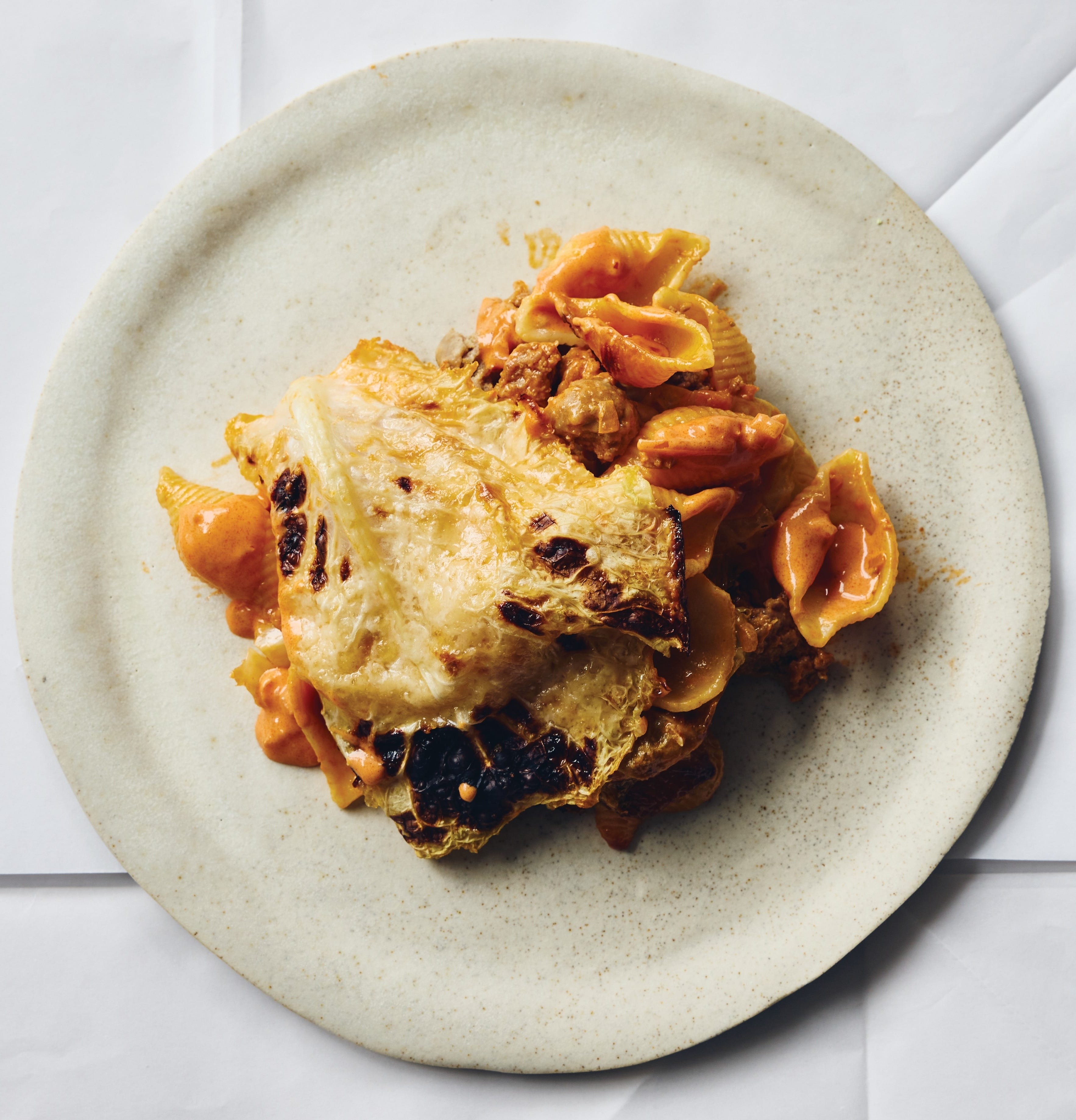
Definitely-Not-A-Lasagna Baked Cabbage and Shells With Sausage-Vodka Sauce
From Obsessed With the Best by Ella Quittner. Copyright © 2026 by Ella Quittner. Reprinted by permission of William Morrow Cookbooks, an imprint of HarperCollins Publishers.
LEVEL: A bit of skill
TIME: 1 hour and 45 minutes
MAKES: 8 as a main course
This is an unsanctioned riff on a Marcella Hazan recipe that once won me a lasagna cook-off against a friend’s ex-boyfriend. The winning Hazan dish was an elegant, subtle composition of blanched savoy cabbage, an amount of bechamel that demonstrated great restraint, cheese, and ground pork. It was layered and baked until browned on top, and it was creamy throughout, but it was definitely not a lasagna. My friend’s ex spent a few days leading up to our contest making marinara from scratch and painstakingly forging homemade lasagna noodles out of flour and egg, and on the day of, he performed the impressive feat of turning a gallon of milk into a bucket of ricotta, which he used in between his other components. I spent 30 minutes doing prep work for Hazan’s cabbage dish and felt incredibly bad when I got every single guest’s vote. I can’t take credit for that victory, since I was just executing another person’s recipe. But if you win a lasagna contest with this variation—which is definitely not a lasagna, either, and which is unrestrained in all the places where Hazan’s curtsied—I will definitely claim credit. So keep me posted!!!
I like to lay down the cabbage in layers, like a sideways cabbage mille-feuille nabe (but with, like, a million other things in it), to simulate noodles. You’ll need a super-sharp knife to cut out pieces, though in the event they fall apart anyway while you’re serving the dish, the final shape does not matter. One cross-tester even noted a preference to make this with strips of cabbage mixed into the noodles, sauce, and meat. To which I said, no problem! Not a lasagna.
Diamond Crystal kosher salt
1 head Savoy cabbage, cored but intact
2 tablespoons olive oil
2 pounds sweet Italian sausages, uncased
1 double batch Vodka Sauce Paccheri (below), made with just 1 pound of a small shape, like shells (aka conchiglie)
1 cup freshly Microplaned Parmesan cheese
Butter, for the baking dish
Heat the oven to 350°F. Butter a 9 × 13-inch baking dish.
In the same pot you’ll eventually use to boil the pasta, bring a few heavily salted quarts of water—2 heaping teaspoons for each quart of water—to a boil. Add the cabbage and blanch for 5 to 6 minutes, until bright green and tender. Remove and set aside to drain. Leave the salted water in the pot to use for pasta.
Place a large, nonreactive pan (i.e. not cast iron—think a Dutch oven or stainless-steel skillet) over medium heat. Add the oil. Add the uncased sausages, season with a few pinches of salt, and let brown deeply, undisturbed, for 4 to 5 minutes, then break up the sausage into small pieces with a wooden spoon. When the sausage is browned and cooked through, set it aside and drain the fat from the pan.
In the same pan, make a double batch of vodka sauce (as noted above, you’re doubling the sauce but not the noodles).
Combine any cheese you have left over from the vodka sauce with the 1 cup called for above.
In the prepared baking dish, lay down an overlapping layer of boiled cabbage leaves (about 6 to 7; tear out the core from any particularly thick ones to make it easier to slice later), like lasagna noodles. Cover with one-third of the cheese, one-third of the reserved sausage, and half of the sauced noodles. Repeat. Top with a final layer of overlapping cabbage leaves, the rest of the sausage, and the rest of the cheese.
Bake for about 25 minutes, until gently bubbling around the edges and the cheese is browned in spots all over top. (If the cheese hasn’t browned on top, you can use your broiler to finish briefly at the end, but don’t let it linger—the cabbage will burn and the vodka sauce will break from the high heat.)
Let cool for about 10 minutes, then use a sharp knife to serve in messy slices.
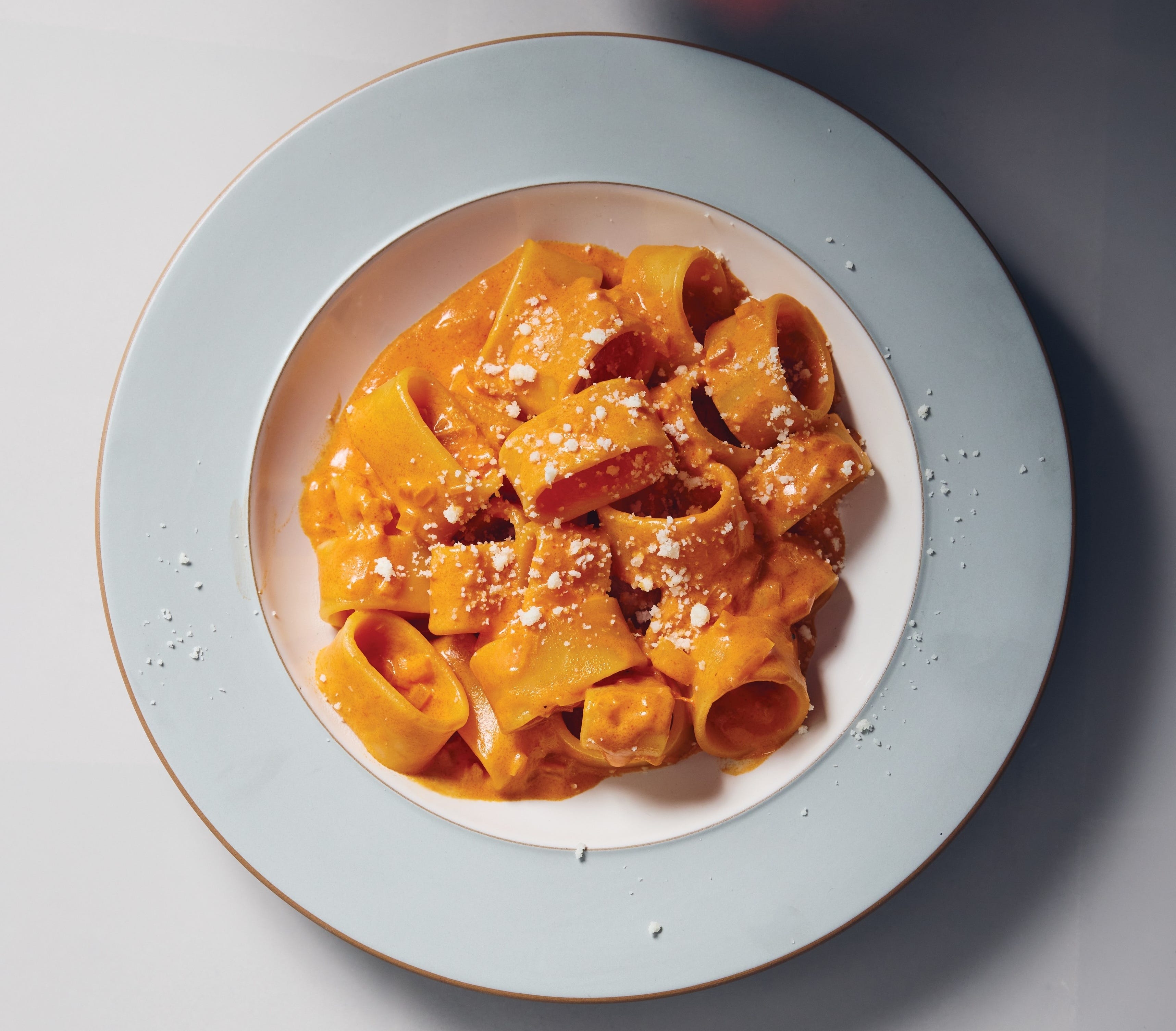
Vodka Sauce Paccheri
From Obsessed With the Best by Ella Quittner. Copyright © 2026 by Ella Quittner. Reprinted by permission of William Morrow Cookbooks, an imprint of HarperCollins Publishers.
LEVEL: Anyone can easily execute
TIME: 1 hour
MAKES: Pasta for 4 hungry people, or 6 as a side
I have a Dionysian fixation on two vodka sauces. This recipe aims to meld them, plus amp up the tanginess. (I know we’re all sick of me saying “flavor maximalist, technique minimalist” by now, but my editor has begged me to remind you. I suspect she’s trying to sell stickers.)
The first is of course the venerable Grossy Sawce, which its loyal architect Dan Pelosi accurately describes as “completely flawless,” “inappropriately thick,” and “illegally glossy.” The second, I’m a little embarrassed to admit—only because I have this fantasy where I exist outside of the monoculture—is the vodka sauce from Carbone. Internet “dupe” recipes abound, but it wasn’t until Major Food Group released a jarred line that I was able to go full Carrie-from-Homeland on their recipe.
A few things stand out. The first is that the most used ingredient listed is whole peeled tomatoes. This guided me toward adding more sweetness to the otherwise punchy, acidic tomato paste. (The jar label also lists sugar as its own ingredient.)
The second thing that stands out is the term “slow cooked,” which is rarely advertised in competitors’ vodka sauce recipes. (“Quick and easy” and “weeknight dinner” are far more common.) But “slow cooked” overlapped with a key finding from my trials, and something I’ve long admired about Pelosi’s Sawce: there’s a protracted reduction period after adding the starchy pasta water, which is “slow” relative to several popular variations. (Nigella Lawson’s version on New York Times Cooking has only 30 minutes of cooking.)
I leaned into the sort-of-slow cook, with a dedicated twenty minutes of onion attention to get you to halfway-caramelized, and then a first reduction with starchy pasta water and vodka and tomato paste, and a second with cream. The third thing that stands out from the jar is that Carbone adds spice in the form of a Calabrian chile spread that includes vinegar. I’d long turned to these peppers in my sauce because I love the slow creep of background heat, but just the preserved kind in oil. So, to mimic the pickled spread, I added a bit of vinegar in with the vodka. Maybe it’s all too much, a clear indicator that I’ve taken the whole “flavor maximalist” thing too far. My editor and I don’t care, so long as you buy a sticker.
Diamond Crystal kosher salt
1 pound dried rigatoni or paccheri
3 tablespoons olive oil
2 tablespoons unsalted butter, plus 1 tablespoon to add at the end
1 large yellow onion, finely diced
4 garlic cloves, minced
1 tube (roughly 4 ½ ounces) double-concentrated tomato paste
1 to 2 Calabrian chiles in oil, drained and minced
1 teaspoon white vinegar
1/2 cup decent-quality (not necessarily fancy) vodka
1 teaspoon sugar
1 1/3 cups heavy cream
1 cup freshly Microplaned Parmesan cheese
Bring a pot of heavily salted water—about 2 heaping teaspoons per quart of water—to a boil on your scariest burner. When the water comes to a boil, add the noodles and cook for 3 minutes less than the package suggests. Before draining, reserve at least 1 ½ cups of starchy cooking water, or more if you think you’ll have leftovers. Drain the pasta and set it aside.
Meanwhile, place a large, nonreactive pan (i.e. not cast iron—think a Dutch oven or stainless-steel skillet) over medium-low heat. Add the oil and 2 tablespoons of the butter. When the butter has melted, add the onion and garlic and 1 ½ teaspoons salt. Cook for about 20 minutes, stirring occasionally, until the onions are melty, fragrant, sweet, and beginning to turn caramel-brown around the edges.
Adjust the heat to medium. Add the tomato paste and cook for about 4 minutes, until darkened and sticking to the bottom and sides of the pan. Add the peppers and sauté into the paste and onions. Deglaze with the vinegar and vodka and scrape down the sides and bottom of the pan to incorporate the browned bits. Whisk to combine into the tomato paste. Add about 3/4 cup of the reserved cooking water and the sugar and whisk again. Turn the heat to medium-low and cook at a simmer until reduced by one-third, about 15 minutes. Add the cream. Continue to cook for another 15 minutes or so, until thick, glossy, and rusty orange.
Add the reserved al dente noodles to the sauce over low heat, plus 2/3 cup of the cheese and the remaining 1 tablespoon butter, and toss to coat. You may need more pasta water to thin the sauce out enough to coat and grip your noodles; the sauce should be thick and shiny but should cling for dear life to the noodles. I typically add about 1/3 cup more pasta water at this point. Taste and add more salt if needed to bring out all the sour, spicy, and savory notes.
Top with the rest of the cheese to serve.
NOTE: If you’re making more sauce than you need, transfer the extra to an airtight container; it will keep in the refrigerator for about 5 days, and if you save some of that extra starchy water, it will come alive like new when tossed with hot noodles.
I've had my eye on this cookbook since Ella announced she was writing it. I can't wait to snag a copy. And man, Maggie, it's dangerous to sit down and listen to your podcast. I'd now love to quit my day job, bury myself in Marcella Hazan's books, and cook my heart away, ha! Seriously, SO much great cooking inspo here. Thanks for doing what you do. P.S. I've never made a souflé, and now I feel like I must!
This was the best, most interesting interview I've heard with Ella! Great job Maggie.