


“A lot of my books have been very much about reflecting traditional Chinese cooking and trying to just report accurately on what I find in China,” Fuchsia Dunlop tells me in today’s podcast conversation. “You know, people have taught me recipes and that’s what I put in my book.”
For her new book, Five Tastes, the author of many cookbooks including Land of Fish and Rice, The Food of Sichuan, and Every Grain of Rice, found herself thinking about the core flavor combinations she learned in culinary school in Sichuan, but applying those templates to dishes and ingredients that are more common in the UK than in China.
The result is “a more personal book,” Fuchsia says, full of recipes that she hopes are adaptable to your local markets and dinner routines.
“One of the things for me that’s so inspiring about Chinese cooking,” Fuchsia tells me, “is the love of vegetables and the fact that in China, vegetables are not just some sort of basic side dish. They are cooked with as much care and attention as everything else. And so you end up having dishes that are fantastically healthy and economical and just taste so good, you really want to eat them.”
On the podcast, Fuchsia maps out the way she plans all the dishes she’ll serve at a dinner with friends, making sure some dishes are made ahead and easy to reheat, while others shine at room temperature. Most importantly, she’s not over-committing herself to time at the wok when she’d rather chat with guests.
The book definitely isn’t vegetarian, but you can tell that Fuchsia’s having fun with vegetables, sharing her roasting method for a version of make-ahead fish-fragrant eggplant, and her simple chile-oil tinged carrot salad. One of Fuchsia’s favorites is a dish of green beans that she’s given the guàiwèi (or “strange flavor”) sauce treatment.
The toasty sesame sauce is “also amazing on roasted cauliflower, which is not a Chinese thing at all,” Fuchsia says. And it’s “even nice on toast!”
Get the recipe below, along with a quick dish of noodles that you can throw together whenever time is short. It’s worth listening to the episode, though, for so many cooking (and pantry-stocking) tips from Fuchsia.


The simplest way to enter to win a copy of Five Tastes is to sign up as a paid subscriber to this newsletter by end of day Sunday, October 25, 2026.
We need voice memos! Free subscribers can enter the giveaway by sending in a “what’s in my fridge right now” voice memo for us to play on The Dinner Plan podcast. Follow the instructions here by end of day Sunday, October 25, 2026.
Winner will be alerted by Substack DM and email. 18+, U.S. and Canada addresses only. Giveaway not sponsored or administered by Substack. Ends October 25, 2026. Commissions from affiliate links in this newsletter help to keep this project going.
FROM TODAY’S SPONSOR

Ever had Chinese food that left your mouth feeling tingly? That’s Sichuan pepper.
50Hertz Tingly Foods offers a fun assortment of ways to bring that sensation to your own kitchen. The name 50Hertz comes from research showing the tingling sensation vibrates at around a frequency of 50 Hertz.
Try finishing a simple cucumber salad with their Green Sichuan Pepper Oil. It adds a bright, citrusy aroma and makes your mouth tingle in the best possible way. They also make tingly peanuts and cashews—the perfect snacks to pair with a cold beer.
Use code TINGLYDINNERPLAN for 15% off.

Fuchsia mentioned:
Fergus Henderson’s Cabbage salad and brown shrimp (The Telegraph)
Mapo tofu (National Post)
Cold chicken with spicy Sichuanese sauce (Serious Eats)
Smacked cucumber salad (The Telegraph)
Steamed fish with ginger and scallion (The Guardian)
Silken tofu with avocado (School of Wok)
Fergus Henderson’s The Book of St John (Thrift Books)
Clarissa Wei’s Made In Taiwan (Bookshop)
Check out our sponsors:
CookShelf: Use code DINNERPLAN for 25% off your first year
50Hertz: Use code TINGLYDINNERPLAN for 15% off
Lotus Professional Series: Use code DINNERPLAN for 10% off
Made In Cookware: Visit madein.cc/dinnerplan to unlock your discount offer
Hardie Grant: Find Taiwanese? by Eric Sze wherever you buy cookbooks
Maggie mentioned
Kristina Cho’s vermicelli and clams from Chinese Enough (Bookshop)

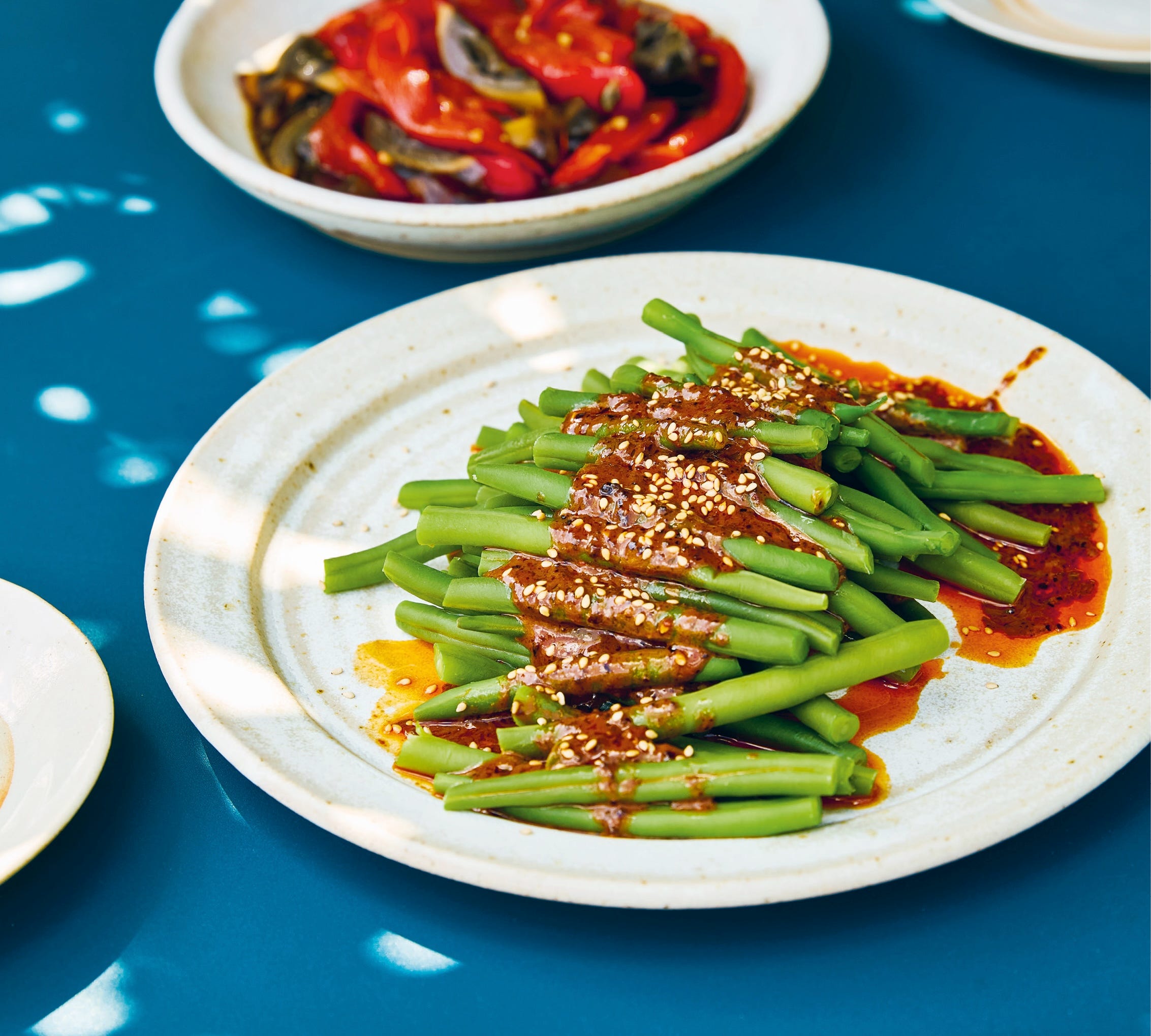
Green Beans With Strange-Flavor Sauce
Excerpted from Five Tastes: Delicious Recipes for Chinese Flavors. Copyright © 2026 by Fuchsia Dunlop. First published by The Random House Group, Ltd. Used with permission of the publisher, W. W. Norton & Company, Inc. All rights reserved.
In Sichuan, the classic “strange-flavor” sauce, a tempting melange of sweet, sour, spicy, and salty seasonings in a sauce enriched by sesame paste, is used for cold chicken, rabbit, offal, and noodles. But beyond these traditional applications, the possibilities are limitless. Inspired by Indonesian gado gado and Lebanese cooked mezze in tahini sauce, I have taken to dressing all kinds of vegetables—boiled, steamed, or roasted—in these sparkling Sichuan flavors.
The sauce is fabulous with boiled green beans, as in this recipe, and also with roasted cauliflower or butternut squash, steamed or roasted broccoli, blanched spinach, barbecued meats or, indeed, practically anything. Perhaps the next step is Sichuanese deviled eggs? I’ve enjoyed leftovers of the sauce on buttered toast and crumpets!
For the sauce:
2 tbsp sesame paste
2 tbsp light soy sauce
1½ tsp Chinkiang vinegar
1½ tsp sugar
¼–½ tsp ground roasted Sichuan pepper, or 1–2 tsp red or green Sichuan pepper oil
2–3 tbsp chile oil, with or without chile sediment
2 tsp sesame oil
For serving:
14 oz (400g) green beans
2 tsp sesame seeds, to garnish (optional)
First, make the sauce. Place the sesame paste in a small bowl and stir and mash it with a spoon until the consistency is even. Gradually mix in the soy sauce and vinegar, taking care to incorporate completely between additions so you end up with a smooth, creamy emulsion. Add the sugar and mix well. Stir in the Sichuan pepper or Sichuan pepper oil, chile oil, and sesame oil.(Once made, the sauce keeps well in the fridge for a few days.)
Trim the beans and cut them into bite-size lengths. Tip into a panful of boiling water and boil for a few minutes, until cooked to your liking (I prefer to cook my beans just beyond the squeaky stage, to the point where they are tender but still a little taut). Drain and cool them immediately in a bowl of ice water or under the cold tap, to preserve their bright green color. Shake well in a colander and allow to dry off.
Tip the drained and dried beans into a serving bowl. Give the sauce another stir, then use it to dress the beans. Sprinkle with the sesame seeds to garnish if you wish.
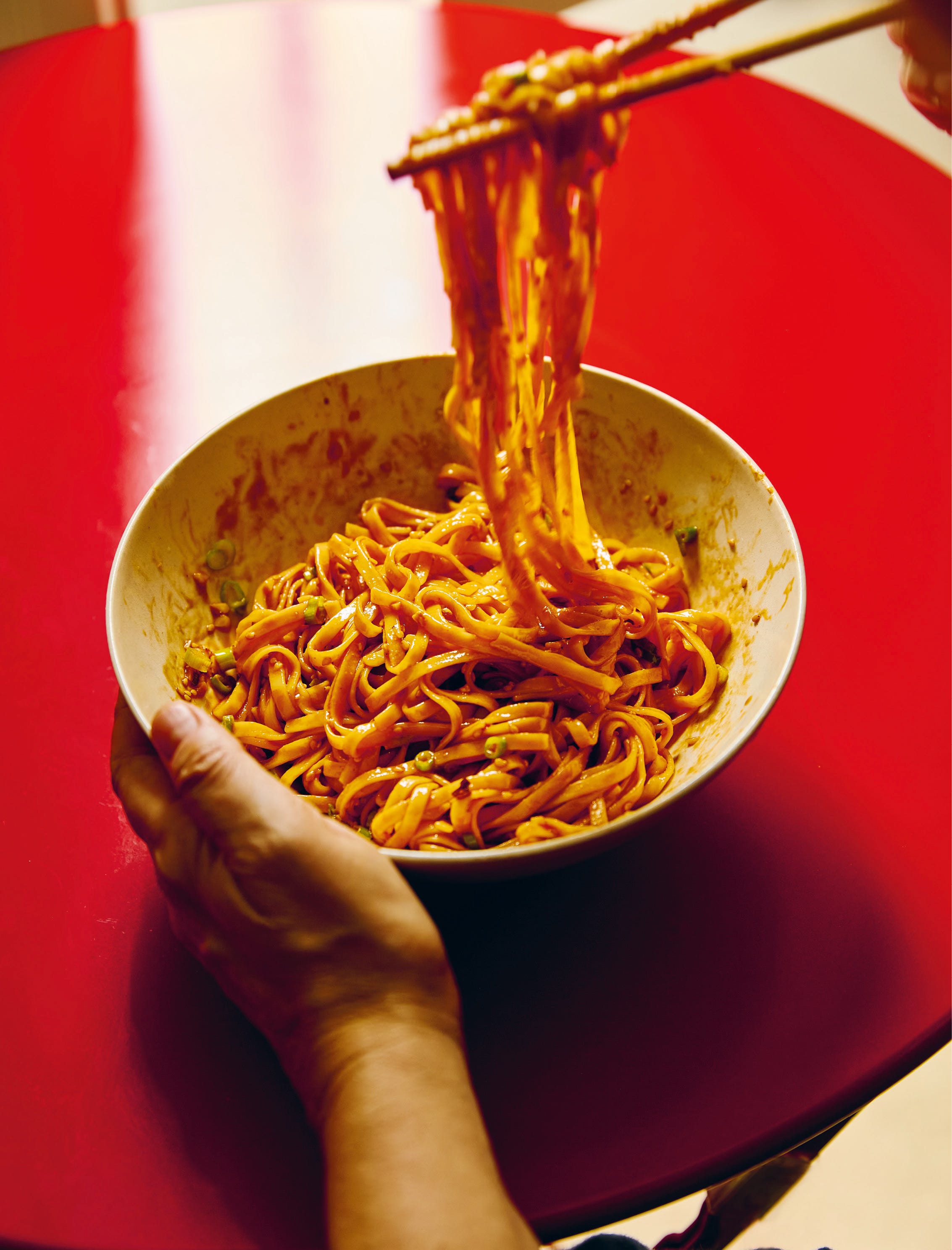
Spicy Peanut Butter Noodles
Excerpted from Five Tastes: Delicious Recipes for Chinese Flavors. Copyright © 2026 by Fuchsia Dunlop. First published by The Random House Group, Ltd. Used with permission of the publisher, W. W. Norton & Company, Inc. All rights reserved.
When I need to conjure up a quick meal out of nothing, I often turn to my stash of dried noodles and Chinese seasonings. A simple bowl of noodles, stirred into excitement by a spicy Sichuanese sauce, finished with some sliced green-onion greens and fragrant seeds or nuts, is extremely satisfying and can take less than 15 minutes to make—faster and much cheaper than
takeout, and less wasteful.
I devised a version of this recipe for a magazine that was running a feature on pantry cooking and wanted me to use ingredients that didn’t require a trip to a specialty shop. For this reason, I used peanut butter instead of the sesame paste that people use in Sichuan—and I think it may have been the most popular recipe I’ve ever written.
The following serves one for a snack or a midnight feast: scale up as required. Top the noodles with a fried egg if you like.
2 tsp smooth peanut butter
1 tbsp light soy sauce
1½ tsp Chinkiang vinegar
1 tbsp chile oil, with or without chile sediment
½ tsp sesame oil or red Sichuan pepper oil
4 oz (110g) dried wheat or other noodles
1 tbsp finely sliced green-onion greens
1 tsp toasted sesame seeds
Place the peanut butter in a small bowl and gradually add 1 tablespoon of water, mashing with the back of a spoon to create a smooth, creamy emulsion. Stir in the soy sauce and vinegar, and then the chile oil (and sediment, if using) and sesame or Sichuan pepper oils.
Bring a panful of water to a boil and cook the noodles to your liking. Drain well and place them in a deep bowl. Pour the sauce over the top, and sprinkle with the green-onion greens and sesame seeds. Mix everything vigorously together while the noodles are still piping hot.
The sauce sounds like something I could use on everything in my fridge. Making some today - thank you!
Really loving this conversation, especially the part about different soy sauces and Chinese vinegars! Thanks for all your great finds Maggie!